
My Teaching Philosophy
Empathy and Emotional Support
One of my core values as an educator is fostering empathy and emotional support in the classroom. I believe that understanding and addressing students’ emotional needs is foundational to creating a safe and productive learning environment. As I observed during moments of chaos, such as a fire alarm incident, students often need calm and empathetic guidance to navigate overwhelming situations. Recognizing their fears and offering reassurance helps build trust and a sense of safety. This approach extends beyond moments of crisis; it informs how I respond to students’ everyday emotions. By validating their feelings and modeling respectful problem-solving, I aim to cultivate an environment where students feel seen and supported. A classroom built on empathy becomes a space where students can take risks, grow, and learn without fear of judgment or reprimand.
Creativity and Engagement
Creativity lies at the heart of my teaching philosophy. Art education provides a unique opportunity to spark curiosity and imagination, and I strive to design lessons that are engaging, hands-on, and relevant to students’ lives. For example, creating vibrant anchor charts has shown me how visual tools can captivate students’ attention and deepen their understanding of concepts. When lessons incorporate artistic expression or interactive activities, students are more likely to connect with the material and feel excited about learning. Creativity also serves as a bridge to meet students where they are, offering alternative pathways for those who may struggle in traditional academic settings. A classroom driven by creativity is one where students feel empowered to explore their ideas, express themselves, and discover their potential.
Advocacy and Inclusion
Another guiding value in my teaching philosophy is a commitment to advocacy and inclusion. I believe that art education should address systemic biases and celebrate diverse perspectives. I have worked with kids from many different backgrounds, and Incorporating discussions about topics like cultural appropriation and representation in art encourages students to think critically about the world around them. It is crucial to approach marginalized cultural elements with respect and understanding, ensuring that lessons honor their origins rather than exploit them. My classroom will be a space where students can express their identities and engage with art that reflects their experiences. By fostering an inclusive environment, I hope to empower all students to find their voice and see themselves represented in the curriculum.
Growth and Adaptability
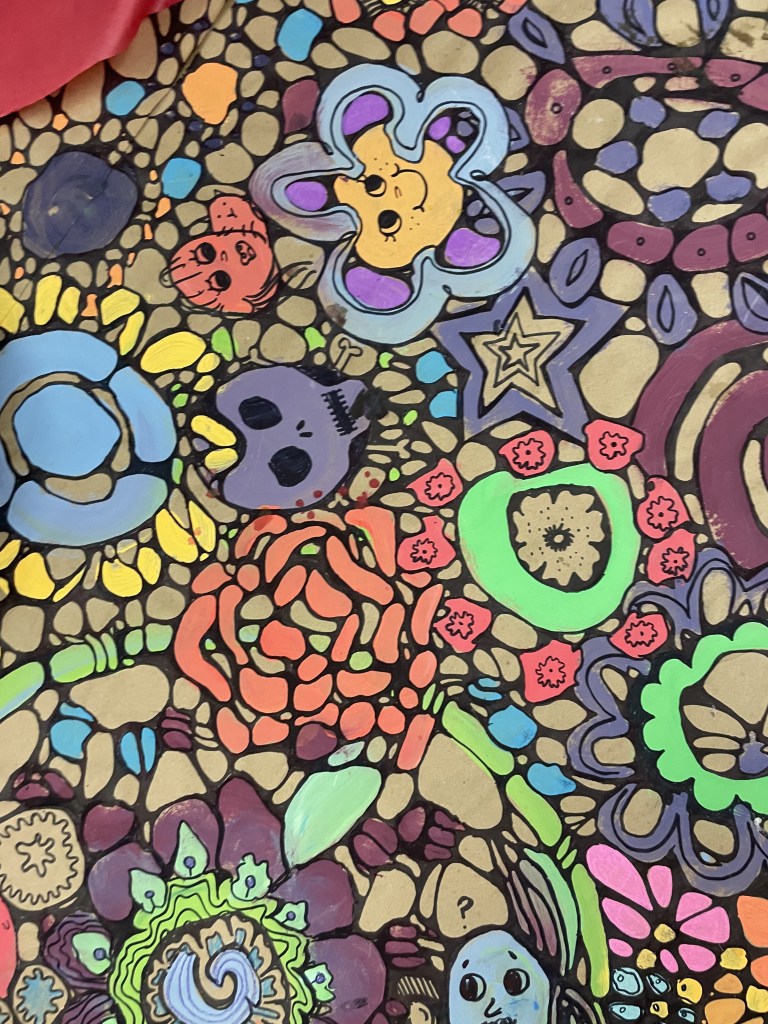
As a preservice educator, I value growth—both my own and my students’. Teaching is an evolving journey, much like the patchwork quilt I use to represent my development. Each experience, whether it’s learning to manage conflicts or adapting to new challenges, adds to the fabric of my identity as an educator. I’ve learned the importance of maintaining a calm and adaptable mindset, especially in unpredictable situations. For students, growth is fostered through an environment that balances clear expectations with opportunities to explore and make mistakes. By integrating mindfulness practices and reinforcing routines, I aim to create a structured yet flexible classroom where students feel confident to grow academically, socially, and emotionally.
 Ava Sandersen