
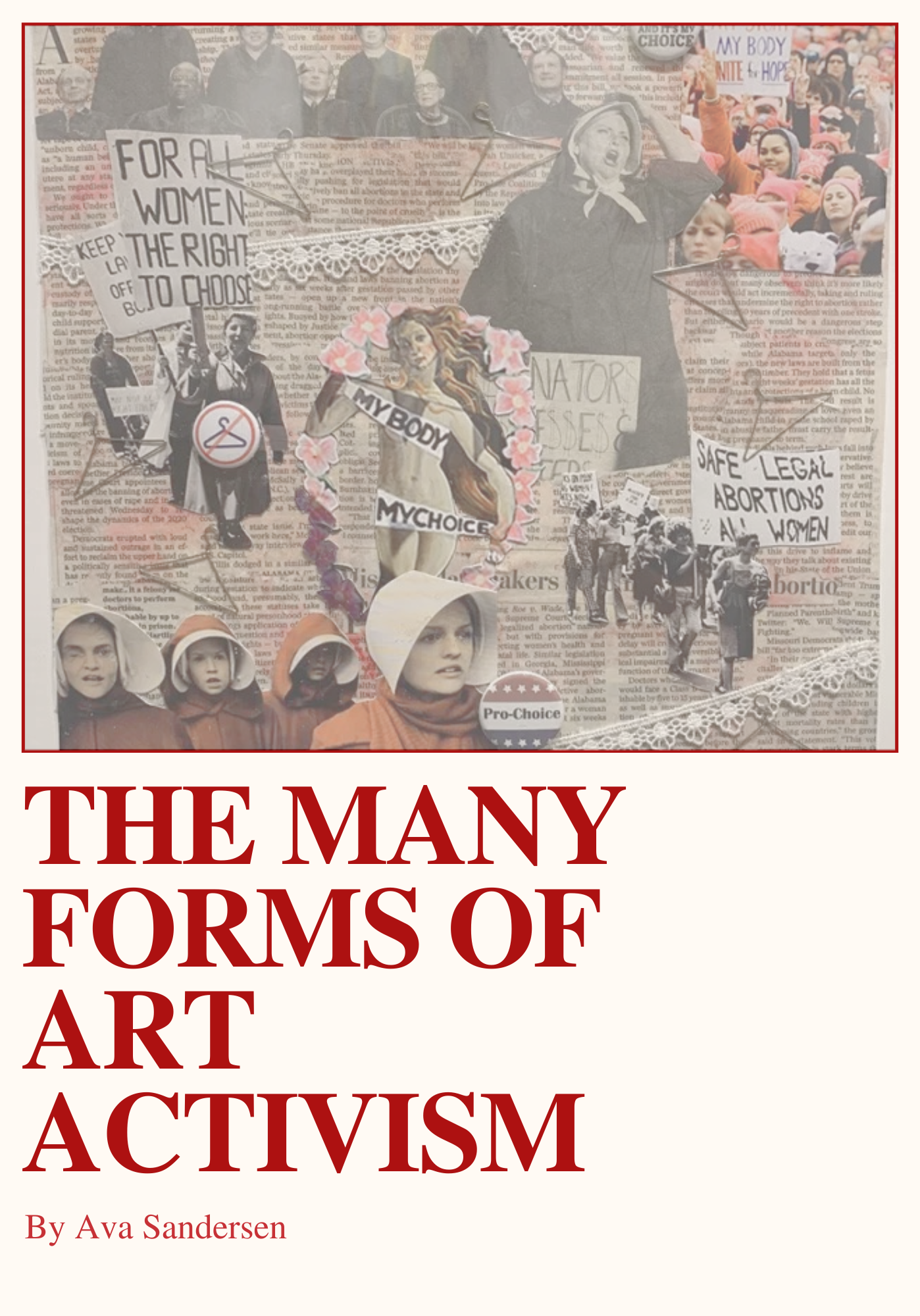
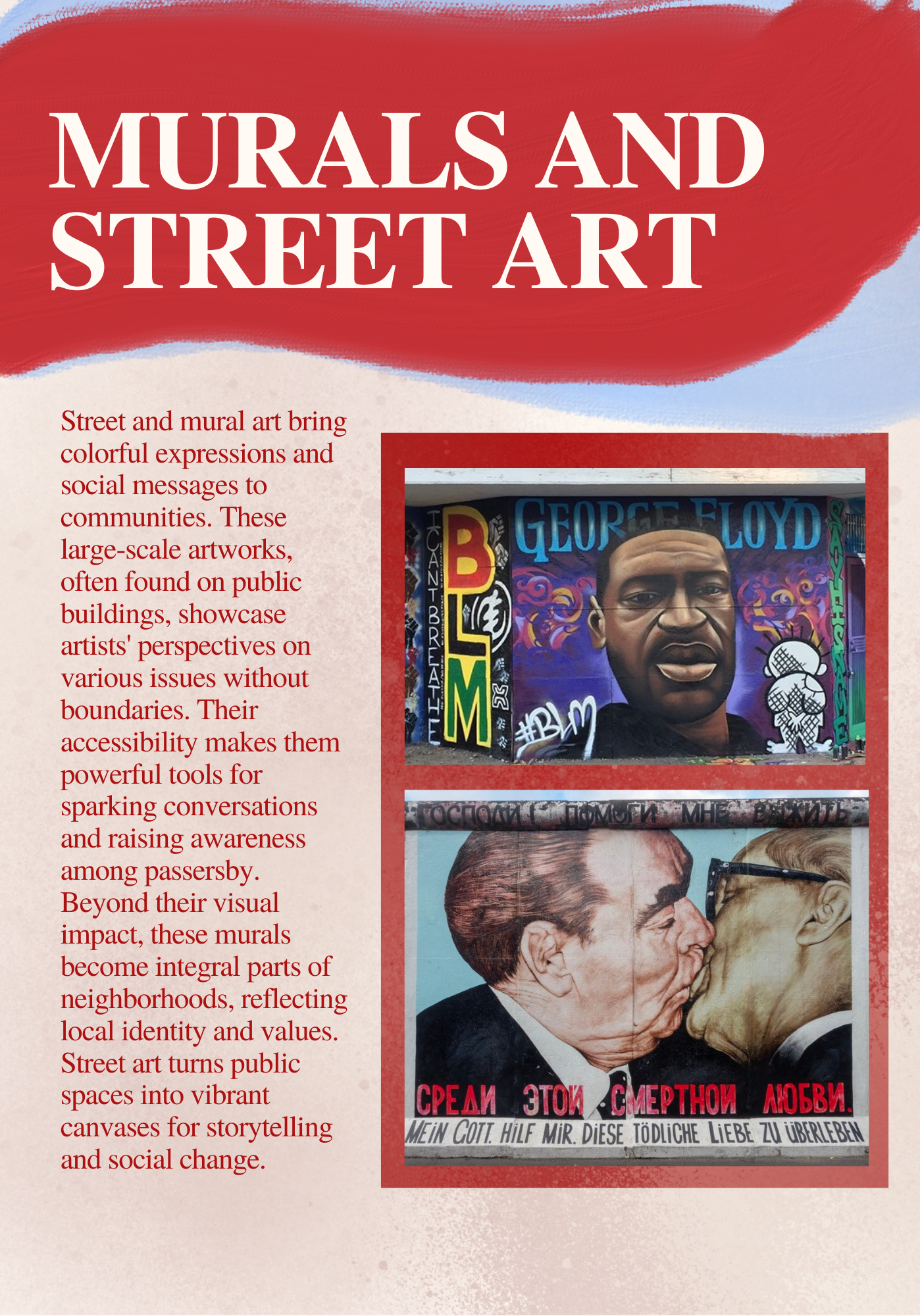
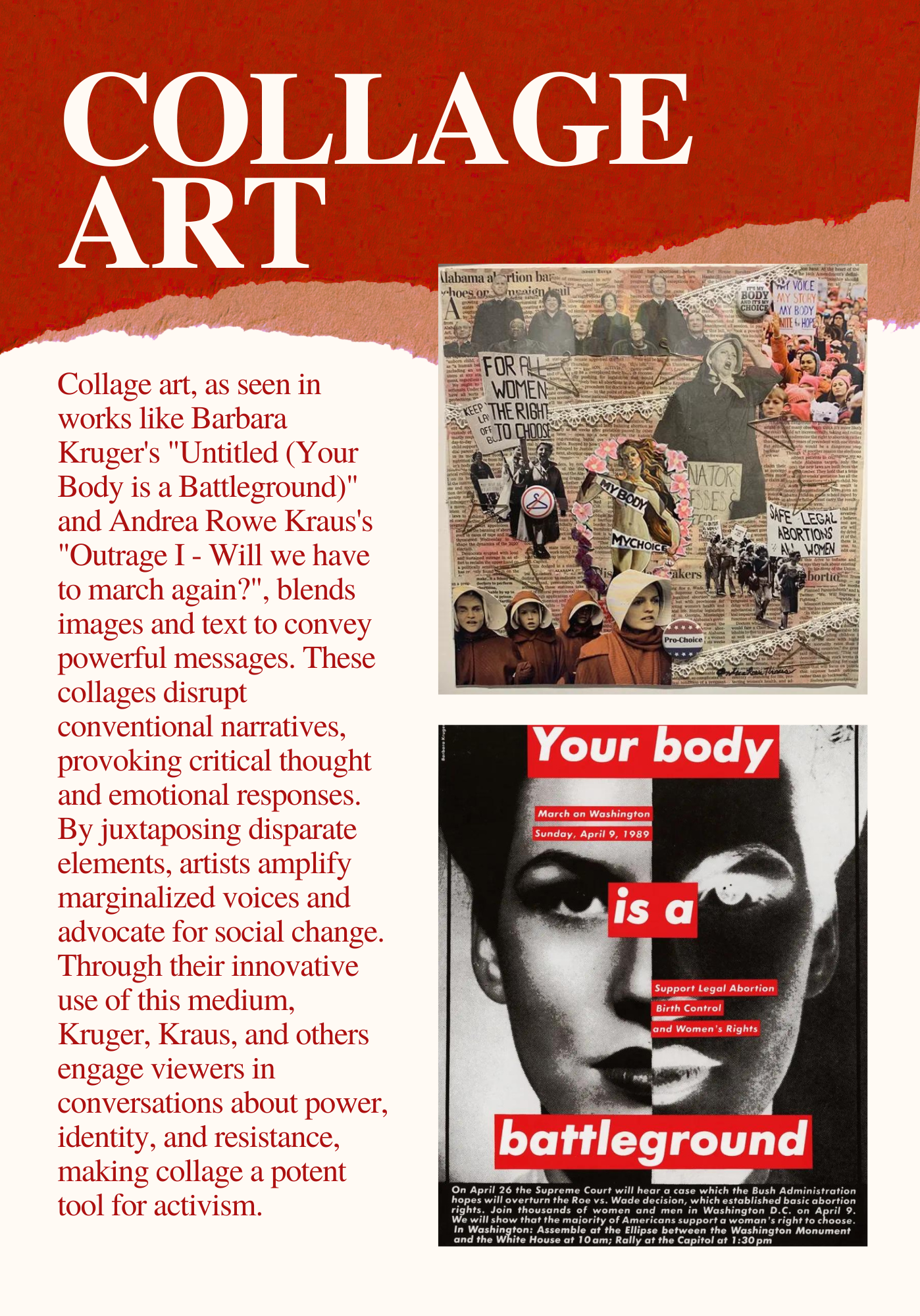
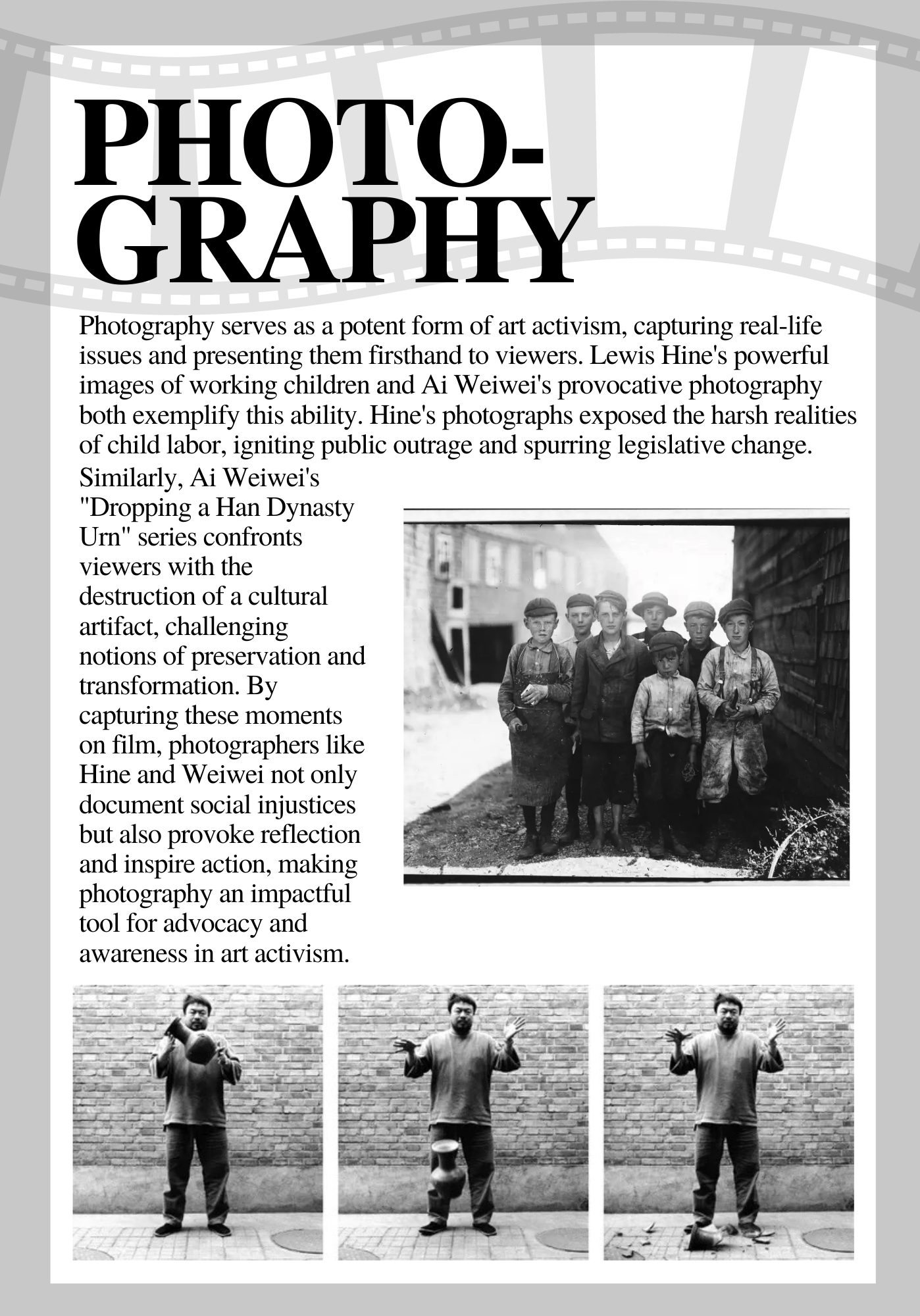
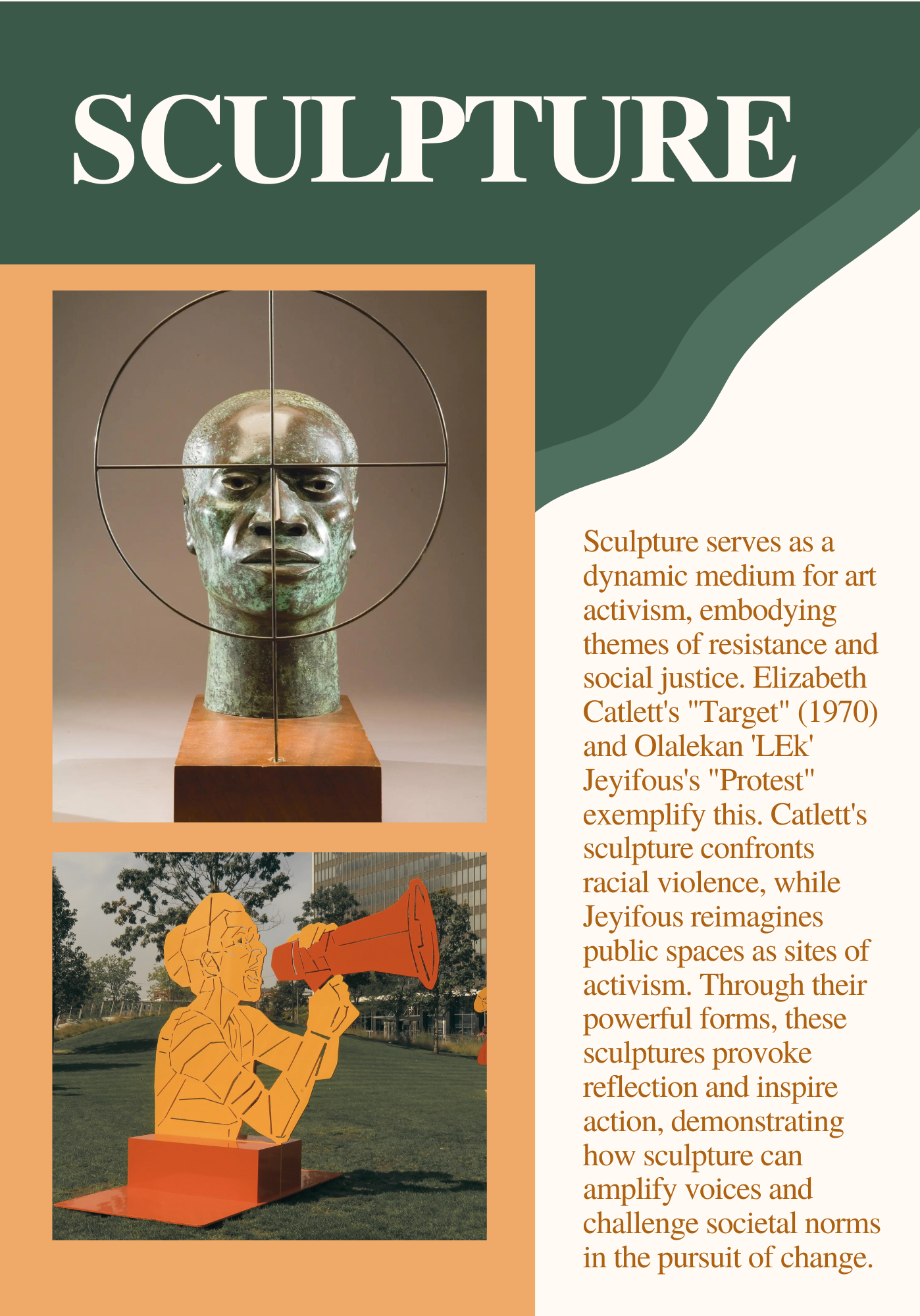


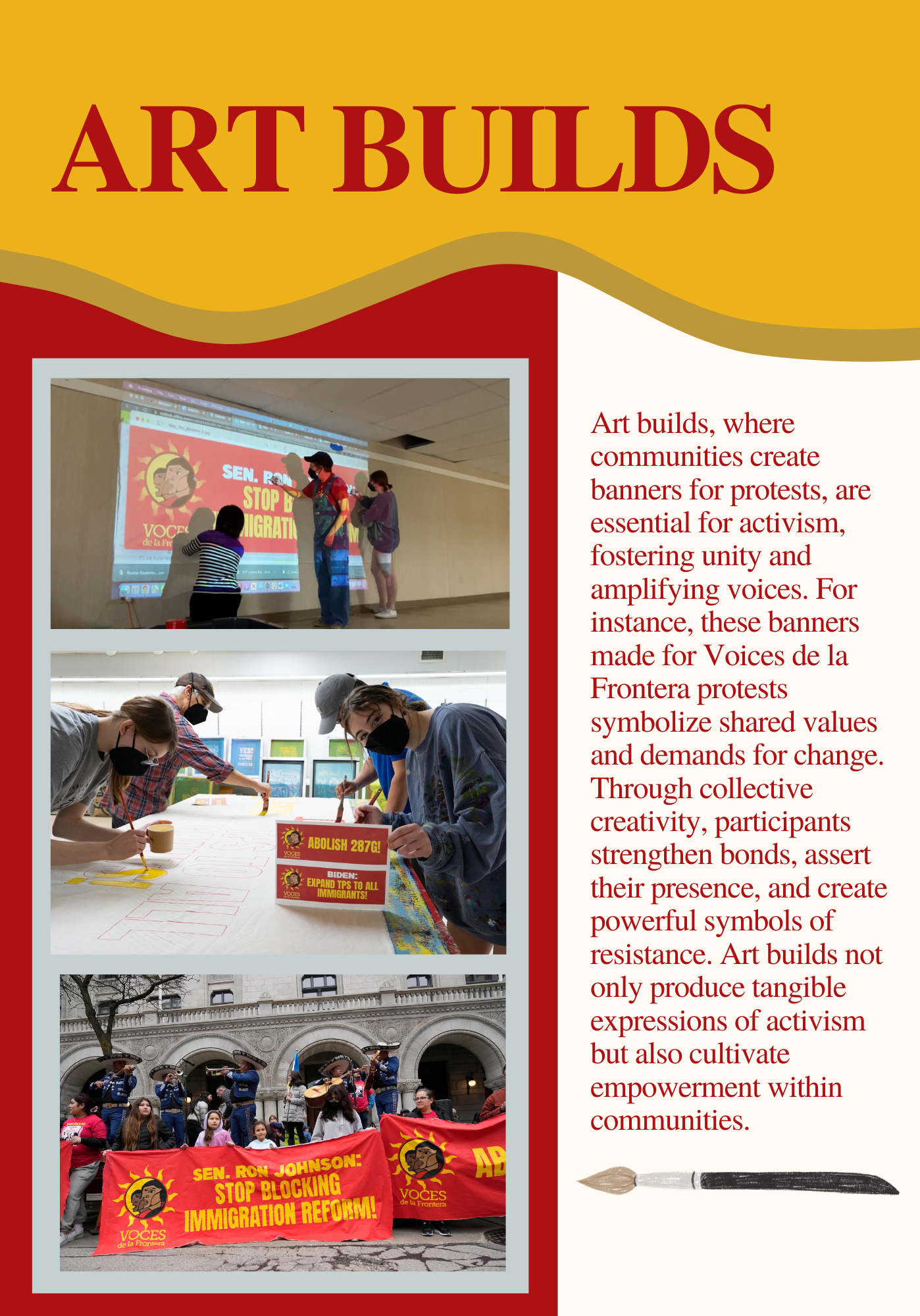
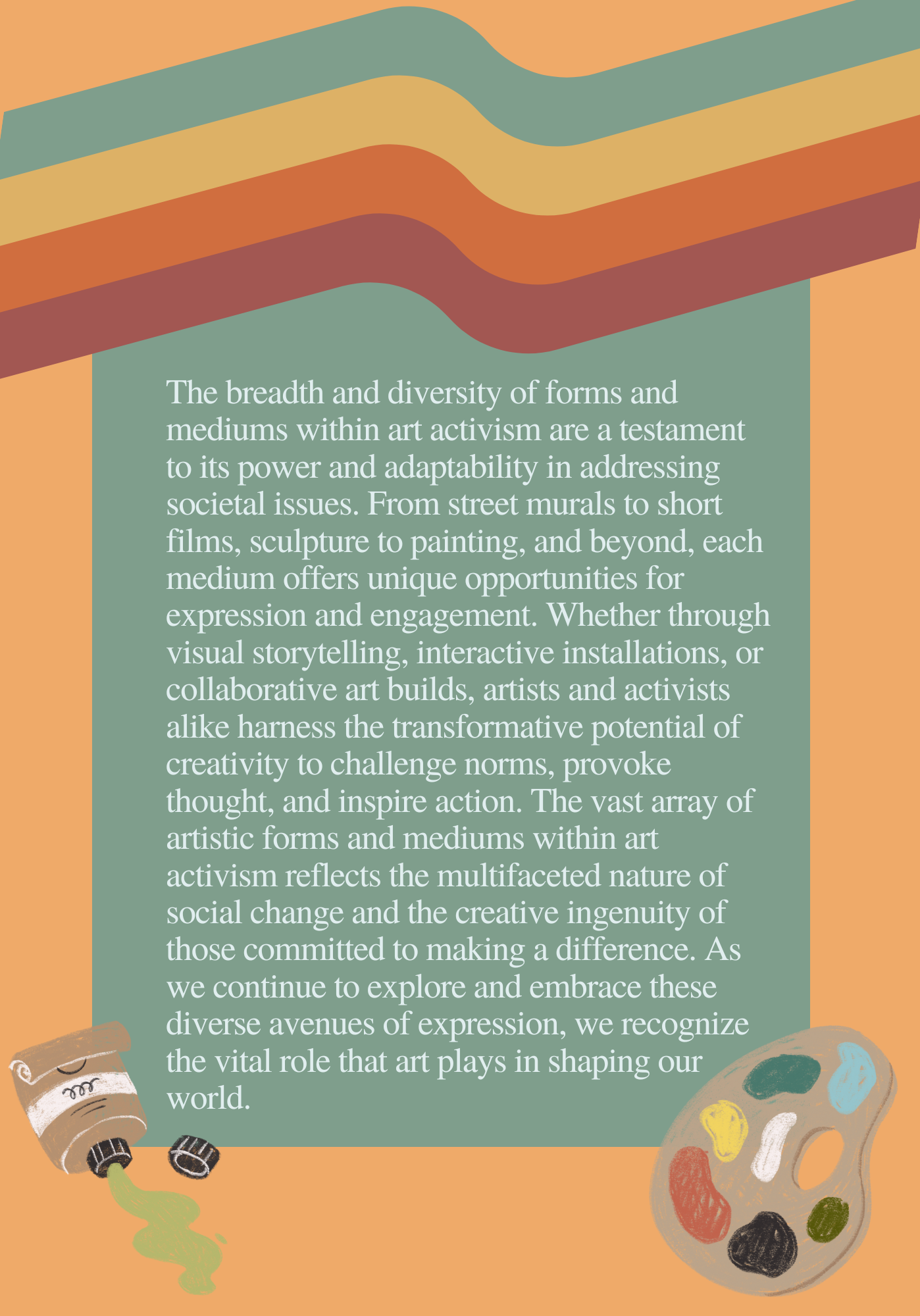
Creating the visualization for my zine project was a deliberate and thoughtful process that involved carefully selecting both the images and the digital platform. I made the decision to curate a diverse collection of images and artworks representing various mediums from different movements and forms of activism. This selection aimed to provide students with a comprehensive visual representation of art activism, highlighting its multifaceted nature and profound impact on society. Additionally, I chose Canva as the digital platform for its accessibility and visually engaging features. Canva’s user-friendly interface allowed me to create dynamic layouts and incorporate interactive elements, such as clickable links and pop-up descriptions, that enhance the learning experience for students by encouraging exploration and interaction.
Throughout the process of creating the visualization, I found that my understanding of the topic deepened in ways that reading alone might not have facilitated. Drawing insights from course readings, particularly Ann Nielsen Hibbing and Joan L. Rankin Erickson’s article, “A Picture is Worth a Thousand Words: Using Visual Images to Improve Comprehension For Middle School Struggling Readers,” I recognized the immense value of visual representations in fostering comprehension and personal connections with the material. (Hibbings and Erickson, pg. 795) By curating visual representations of art activism, I aimed to stimulate curiosity, promote comprehension, and inspire meaningful engagement among students. This approach aligns with Hibbing’s emphasis on purposeful engagement and strategic instructional tools to enhance comprehension and foster critical thinking, highlighting the transformative potential of visualization in the learning process.
The inspiration for the visualization process stemmed in part from Ms. Robinson’s approach in Lattimer’s book, where students engaged in viewing and discussing historical drama photographs (Lattimer, pg. 31-32). I decided to incorporate a wide range of real-world examples of art activism. This decision was made with the intention of allowing students to deepen their understanding and appreciation of the concepts presented in the reading. By utilizing diverse examples, I aimed to create a zine that serves as a gateway for students to explore topics that are important to them, encouraging reflection and engagement with visual representations of activism. Furthermore, this visualization acts as a catalyst for inspiration and brainstorming for a future project where students will create their own art activism piece. Through this process, students are prompted to consider the various mediums available to them and even explore the possibility of combining different mediums to convey their message effectively.
The process of creating the visualization for my zine project has underscored the significance of visualization as a powerful tool for learning and engagement. By curating a diverse collection of images and artworks and utilizing Canva as the digital platform, I aimed to provide students with an immersive and interactive learning experience that promotes comprehension, inspires creativity, and fosters critical thinking in the realm of art activism.
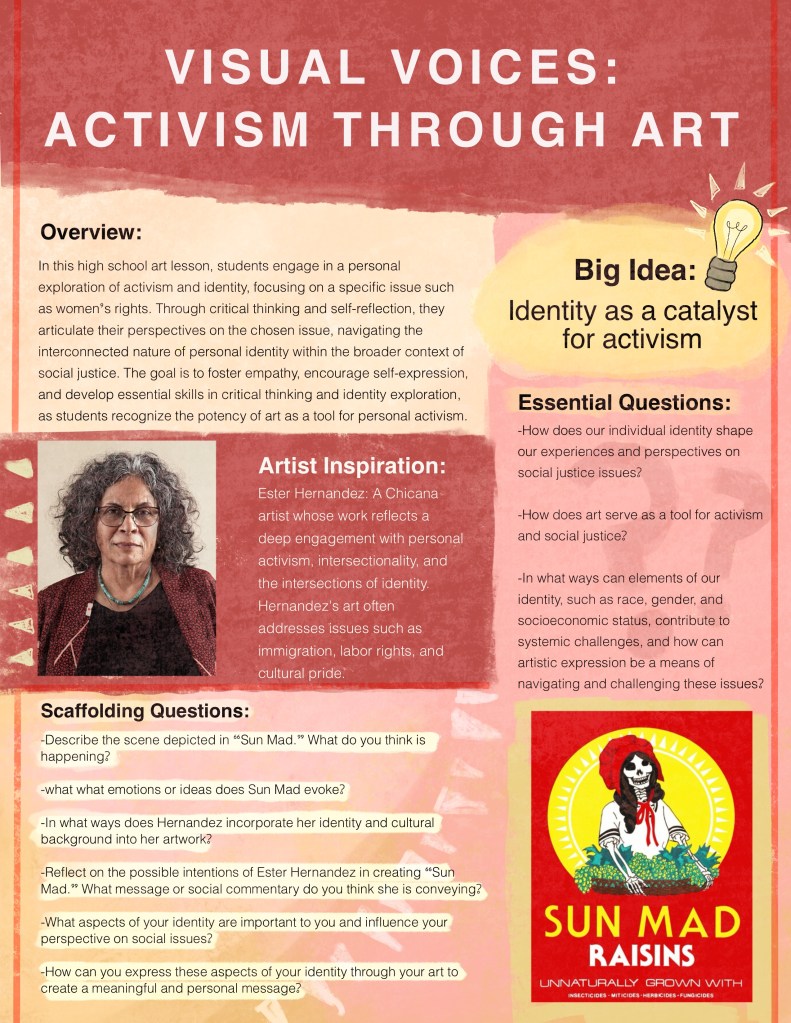
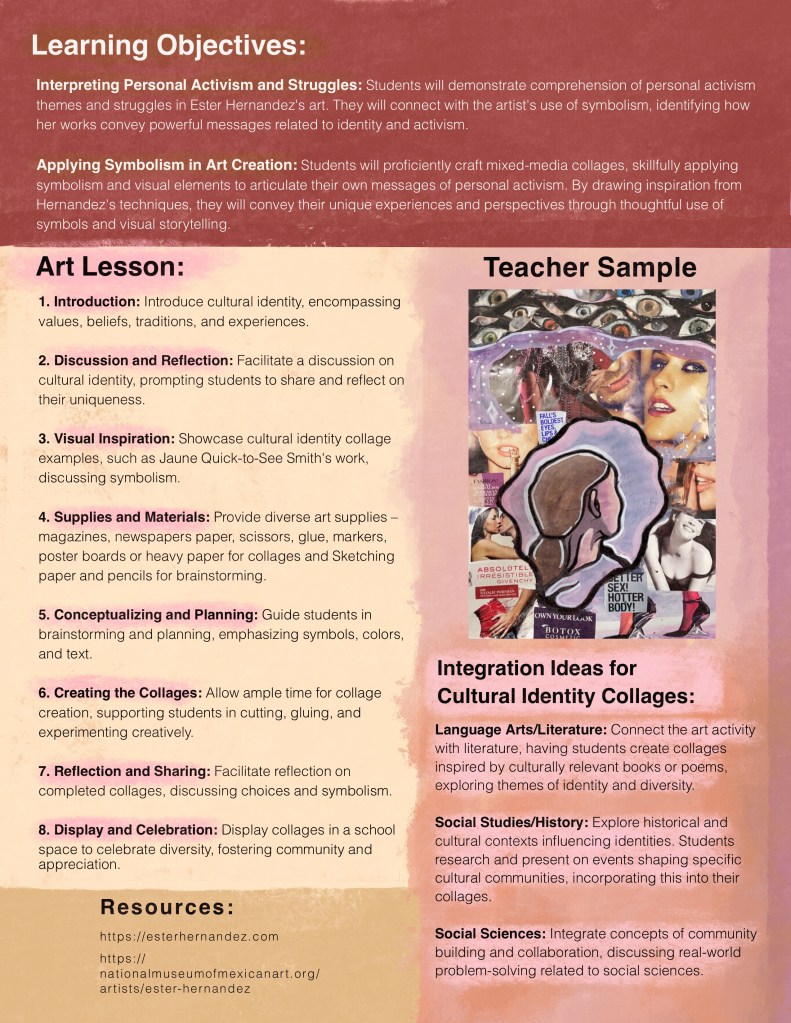
In Addition: A Lesson Plan Inspired by Ester Hernandez

This collage serves as an example created for an art education course. Its purpose is to depict the societal pressures faced by women, including the expectation to conform to gender norms, the influence of patriarchy, and the over-sexualization of women in media.
I feel this may be a good example to accompany my lesson as well, and decided to include it as well, with this being my art education blog! Below is another lesson plan I have done about art activism, with a focus on Ester Hernandez’s work, Sun Mad Raisins.
Citations
Hibbing, Anne Nielsen, and Joan L. Rankin-Erickson. “A picture is worth a thousand words: Using visual images to improve comprehension for middle school struggling readers.” The reading teacher 56.8 (2003): 758-770.
Lattimer, Heather. Reading for Learning: Using Discipline-Based Texts to Build Content Knowledge. National Council of Teachers of English, 2010.

 Ava Sandersen
Leave a comment