In a hypothetical 10th to 12th-grade high school art class, situated within Milwaukee Public Schools, students are immersed in an exploration of artistic activism. This thematic focus serves as the cornerstone of their study, aiming to deepen their understanding of the intersection between art and social change. Through a curated selection of texts, including articles, multimedia resources, and culturally relevant works such as Steve Cutts’ animation “The Turning Point,” students engage in a multifaceted examination of artistic activism. These resources are strategically integrated to provide theoretical frameworks, historical context, and real-world examples, laying the groundwork for students to embark on their own art activism projects.
Printed Text:
Duncombe, Stephen, and Steve Lambert. “Why Artistic Activism?” Why Artistic Activism: 9 Reasons, The Center for Artistic Activism, 18 April 2018
Summary:
The article “Why Artistic Activism: Nine Reasons” by Stephen Duncombe and Steve Lambert delves into the concept of artistic activism and its role in effecting social change. It provides a comprehensive exploration of the interplay between art and activism, drawing on historical examples and contemporary perspectives to elucidate the unique characteristics and effectiveness of artistic activism. The authors present nine compelling reasons why artistic activism is essential in contemporary social movements, highlighting its ability to mobilize affect and effect, its adaptability to the modern landscape, and its capacity to foster a culture of creativity and critical engagement.
Quantitative and Qualitative Measures:
The quantitative measures of the text reveal its considerable complexity. Using StoryToolz, the article is assessed at an average grade level of 12.8. I do not feel like it properly reflects the readability because of how organized, sectioned, and is balanced out with the quantitative mesaures.
For Qualitative measures, I used the following rubric as a guide: SCASS Rubric for Informational Text. Using this rubric, I believe this text demonstrates a moderately complex structure. The organization exhibits implicit and subtle connections between ideas, blending sequential and non-linear presentation to convey the concept of artistic activism effectively. While the language features dense and complex conventions, incorporating abstract and figurative language, it primarily utilizes contemporary, conversational language, making it accessible to a wide range of readers. For instance, phrases like “artistic expression” and “cultural impact” are used to convey nuanced concepts without overwhelming readers with overly complex terminology. Additionally, the sentence structure primarily consists of simple and compound sentences, with occasional complex constructions, ensuring readability for students. The purpose of the text is to introduce and explore the concept of artistic activism, providing historical context and advocating for its effectiveness in driving social change. While it implies a moderately complex knowledge demand, assuming familiarity with activism and art, it also offers explanations and examples to clarify key concepts for readers. Thus, while the quantitative measures suggest a higher complexity level, the qualitative analysis reveals that the language and structure of the text are more accessible than indicated. Therefore, I disagree with the quantitative assessment and believe the text’s complexity is lower than the indicated grade level.
Vocab words that may require additional support:
-Activism
-Contemporary
-Mediated
-Aesthetic
-Marginalized
-Integration
Task and Reader Complexity:
The purpose of using the text is to introduce students to the concept of artistic activism and stimulate critical thinking about its role in social change. By building on students’ cultural assets, the text acknowledges the historical and contemporary significance of art in social movements. The complexity of the task, an ideation session, aligns with the accessibility of the text by encouraging students to engage with the material at a moderate cognitive depth. During this session, students will collaboratively brainstorm and compile a list of issues that matter to them or affect their communities. This task promotes critical thinking and analysis while allowing students to share their perspectives and connect the text to their own experiences and interests. Ultimately, this activity serves as a precursor to a larger individual project where students will advocate for an issue they care about, drawing inspiration from the principles of artistic activism discussed in the text. By starting with a relatively simple task of generating ideas, students can gradually build their understanding and confidence, paving the way for more complex and impactful projects in the future.
Additional Printed Texts:
–Art & Activism. (n.d.). The Art Institute of Chicago. Retrieved March 14, 2024, from https://www.artic.edu/highlights/28/art-activism
Multi-Media:

Art as Activism: Kate DeCiccio, Community Artist | Adobe Creative Cloud [Film]. (April 8th, 2017). Youtube, Adobe Creative Cloud. https://www.youtube.com/watch?v=HyNX1bX-6dU
Summary
This YouTube video featuring Kate Deciccio, a community artist, discusses the value of art as a tool for social change. Deciccio talks about her work in creating murals and portraits that address social issues such as gun violence and police brutality. She highlights the importance of art in promoting self-reflection, resistance, and community engagement.
Quantitative and Qualitative Measures:
The transcript of this video exhibits a high level of complexity based on quantitative measures. With an average grade level of Grade 15, according to readability scores on Storytoolz, the text is deemed challenging for high school students, with it being considered a level of “college junior”. However, I disagree with these scores, as the score is just based on the transcript of the video, and may not fully capture the accessibility of the text, especially considering the visual elements and explanations provided in the video.
Using SCASS Rubric for Informational Text, I beleive this text presents itself as moderately complex, considering various qualitative measures. In terms of text structure, the organization is evident and generally sequential, as Deciccio discusses different aspects of her work as a community artist, such as making murals and addressing social issues like gun violence and police brutality. However, there are implicit connections between ideas, particularly when discussing the broader societal implications of her art, which adds a layer of complexity.
Moreover, the language features contribute to the overall complexity, with Deciccio using fairly complex language containing abstract and subject-specific vocabulary. For instance, terms like “counter-narrative” and “gentrification” may pose challenges for some readers and require additional explanation. Although the purpose of the text is clear – to highlight the value of art as a tool for social change and share Deciccio’s experiences – it also contains implicit elements, especially when discussing the broader implications of her work, adding a moderate level of complexity. Lastly, the knowledge demands of the text are very complex, requiring readers to engage with both the content and the broader societal context, as Deciccio delves into concepts related to art, activism, and social change, alongside references to specific projects and social issues. Overall, considering these aspects collectively, the transcript can be deemed moderately complex, providing a challenging yet accessible reading experience.
Vocab words that may require additional support:
-Counter-narrative
-Gentrification
-Amplify
-gambit
-Freeform
Task and Reader Complexity:
The purpose of using the text is to introduce students to the concept of community art as a tool for social activism. By exploring the role of art in fostering self-reflection, resistance, and community-building, students are exposed to the power of creativity in addressing social issues. Furthermore, the transcript highlights the significance of art in amplifying marginalized voices and promoting social justice, motivating students to engage with relevant societal issues.
The text builds on students’ cultural assets by showcasing the diverse perspectives and experiences within communities impacted by social injustices. Through the portrayal of murals, portraits, and community-based projects, students are exposed to various cultural expressions and narratives, enriching their understanding of social movements and community resilience.
The complexity of the task aligns with the accessibility of the text and students’ prior knowledge by providing a structured yet open-ended opportunity for engagement. The “One question, one comment” activity as presented in Heather Lattimer’s book, Reading for Learning, serves as an accessible platform for students to interact with the text, regardless of their familiarity with the subject matter. By encouraging students to generate questions and comments, the task accommodates diverse learning styles and levels of prior knowledge, fostering meaningful dialogue and comprehension. Additionally, the task’s simplicity and flexibility can help balance the text out if it may be too complex for some students.
Additional multimedia Texts:
“Performance and Protest: Can Art Change Society? | How Art Became Active | EP. 5 of 5 | Tateshots.” YouTube, May 25, 2018. https://www.youtube.com/watch?v=XGy9yJN12lo.
Culturally Relevant:
Summary
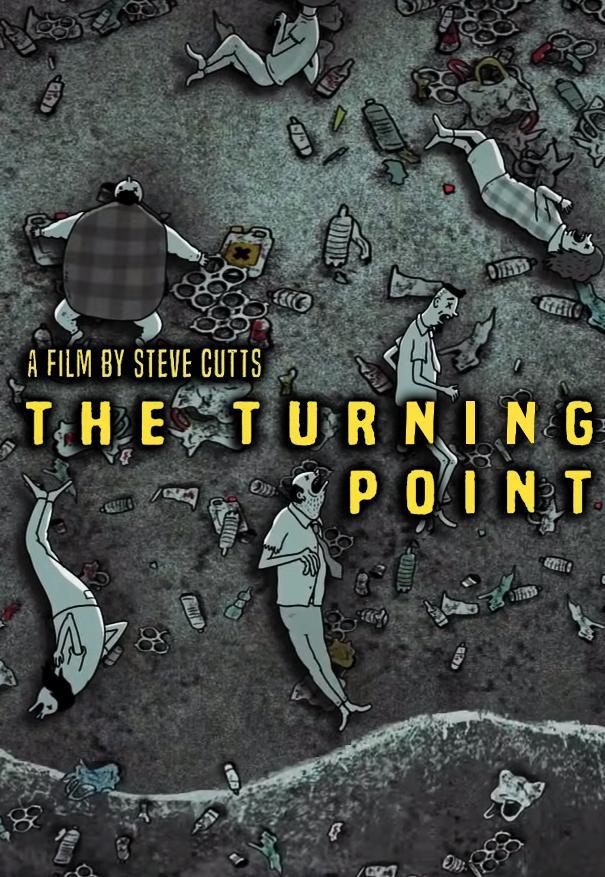
“The Turning Point,” an animated masterpiece by Steve Cutts, offers a gripping exploration of environmental devastation, climate change, capitalism’s toll, and species extinction from an innovative perspective. In this captivating narrative, anthropomorphic animals take the spotlight as the agents of destruction instead of humans. Throughout the story, traditional roles are flipped, presenting humans as the helpless victims of environmental calamities inflicted by their animal counterparts. This reversal is profoundly disturbing, prompting viewers to confront a world where humanity, usually the dominant force, is rendered powerless against the fallout of ecological degradation caused by sentient creatures.
“The Turning Point” stands as a striking example of art activism, utilizing its artistry and animation to convey a powerful message. Crafted with the intention to disturb and provoke, this work serves as a call to action, compelling viewers to reflect on their own role in environmental issues and to take tangible steps towards change. By skillfully blending creativity with social commentary, the animation transcends mere entertainment, serving as a catalyst for awareness and mobilization. Its purposeful construction and emotive storytelling underscore the potential of art as a tool for societal transformation, inspiring individuals to engage with pressing global challenges and strive for a more sustainable future.
Quantitative and Qualitative Measures:
Quantitatively assessing the complexity of “The Turning Point” presents a formidable challenge, given its nature as an animation. However, it is worth noting that the video features music by Wantaways, with the track sharing the same title as the animation itself. When subjected to analysis using tools like Storytoolz, the lyrics of the song received a low complexity score of grade level 0.4, as expected. However, it’s essential to recognize the limitations of such quantitative measures. While the song lyrics may not encompass the full breadth of complexity present in the animation, they are but one component of a multifaceted artistic expression. The animation itself delves into a myriad of intricate concepts and ideas, challenging viewers with profound themes related to environmental degradation, societal structures, and human behavior. Thus, reducing the complexity of the entire source to the simplicity of song lyrics fails to capture the richness and depth of the overarching message conveyed through the visual narrative.
Assessing the complexity of “The Turning Point” is better approached through qualitative measures. Unlike traditional texts, this animation defies easy analysis solely based on written content. Quantitative tools like the SCASS Rubric for Informational Text may not effectively capture its complexity due to its reliance on visuals and minimal text. Instead, qualitative evaluation involves delving into the narrative conveyed solely through visuals, which can present layers of complexity that may not be immediately apparent. For instance, scenes such as a human choking on a discarded bottle or a polar bear signing a document at a conference, followed by a family sinking on an iceberg, require viewers to interpret symbolism and make connections without explicit explanation. The animation’s ability to prompt deeper understanding and provoke conversation about complex topics like corporate responsibility in climate change underscores its qualitative complexity, which extends beyond the confines of traditional textual analysis.
dditionally, when considering the intended audience comprehension level, “The Turning Point” appears to target a more mature audience, likely falling within the grade level range of 10-12. The animation’s exploration of intricate concepts such as environmental degradation, societal structures, and human behavior suggests a depth of complexity that may be better suited for older viewers who possess a more developed understanding of these issues. The symbolism and allegorical elements woven throughout the narrative demand critical thinking and interpretation, further supporting a higher grade level classification. While younger audiences may still glean valuable insights from the animation, the nuanced themes and layered storytelling suggest a level of sophistication more commonly associated with older students or adults. Therefore, while quantitative measures may underestimate the complexity of “The Turning Point,” a qualitative assessment aligned with a grade level of 10-12 offers a more accurate reflection of its intellectual depth and intended audience engagement.
Vocab words that may require additional support:
while this video does not have any words besides the lyrics, there are some vocabulary words I feel students could explore alongside this video:
-Sustainability
-Degradation
-Capitalism
-Exploitation
-Ecological
Task and Reader Complexity:
utilizing “The Turning Point” as a text, the purpose lies in introducing students to a different form of art activism through animation, thereby motivating interest and activating background knowledge on environmental issues and societal dynamics. The animation serves as a powerful tool to spark discussion and critical thinking about complex topics such as environmental degradation, climate change, and corporate responsibility. By presenting these themes in a visually engaging and accessible format, the animation builds on students’ cultural assets by tapping into their familiarity with digital media and visual storytelling. Moreover, “The Turning Point” offers cultural relevance by addressing global concerns that resonate with diverse audiences worldwide, regardless of cultural background. The complexity of the task paired with the text aligns with the accessibility of the animation and students’ prior knowledge and motivation. Given the engaging nature of the animation and its ability to convey profound ideas through visual storytelling, it serves as an excellent introduction to the topic, drawing students into the conversation and encouraging active engagement.
Utilizing Heather Lattimer’s “Reading for Learning” framework, the task paired with “The Turning Point” animation encourages students to engage in a Think-Pair-Share activity focused on analyzing the symbolism and visuals of the animation. Students are prompted to think about questions such as what they find disturbing about the animation, what messages they interpret from it, and how it relates to the concept of art activism. In pairs, they discuss their responses, using a timer to ensure focused conversation. During the share phase, students exchange ideas and information from their partner conversations, holding each other accountable for their engagement. Additionally, students are prompted to reflect in writing on their initial thoughts, any new information or ideas they gained from the discussion, and how their understanding of the topic has evolved. This extension of the traditional think-pair-share method fosters deeper reflection and accountability among students. By guiding students through this structured discussion and reflection process, educators can effectively lead them towards an exploration of art activism and initiate a meaningful engagement with the topic. The activity serves as an introduction to the concept of using animation as a form of social commentary and activism, paving the way for further discussions and inquiry into pressing global issues.
Additional multimedia Texts:
Cutts, Steve. “Man.” YouTube, December 21, 2012. https://www.youtube.com/watch?v=WfGMYdalClU.
Citations:
Lattimer, Heather. Reading for Learning: Using Discipline-Based Texts to Build Content Knowledge. National Council of Teachers of English, 2010.
 Ava Sandersen
Leave a comment